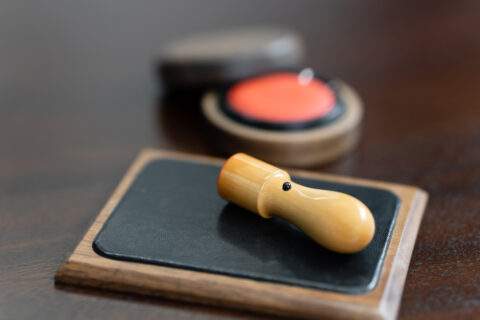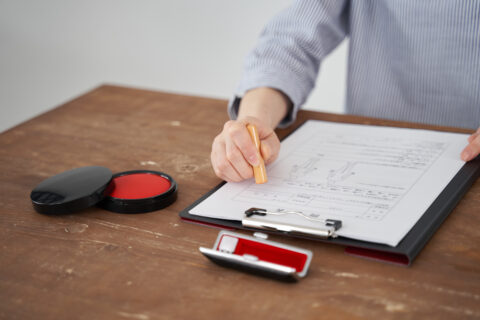


Most people planning a working holiday in Japan spend time researching the visa process, budgeting for the flight, and maybe learning a few phrases. Very few think about a small rubber or resin stamp until they are standing at a city hall counter or sitting across from a landlord, watching someone point at a blank box on a form and say “hanko, please.” That moment arrives faster than expected, and it arrives more than once.
If you are searching for information about hanko for working holiday in Japan, this guide is written for exactly where you are: somewhere between arriving and getting settled, trying to understand why a stamp keeps coming up and what to actually do about it.
Working holiday participants encounter Japan’s personal seal culture in a specific, practical way. It is not about ceremony or tradition — it is about getting your daily admin done without delays. City registration, bank accounts, apartment rental, utility setup: these are the tasks that shape your first weeks, and several of them involve a hanko field on a form. Knowing what to expect, and having the right stamp ready, makes the whole process significantly smoother.
This guide covers why you will be asked for a seal during daily admin tasks, which documents are most likely to need one, what type of hanko suits a working holiday stay, and how to order one in English before the paperwork finds you.
Why This Segment Is Asked for a Seal\
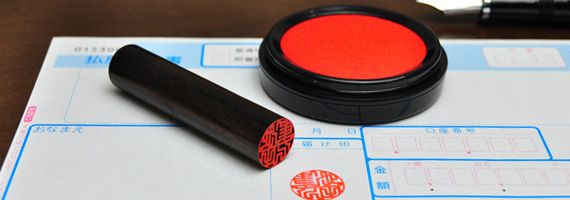
Japan’s relationship with personal seals is long and deeply embedded in administrative culture. For most of the country’s modern bureaucratic history, a hanko served the same role that a handwritten signature serves elsewhere — it was the mark that said “this person confirmed this.” That culture has not disappeared, even as digital options and signatures have become more common in some sectors.
For working holiday participants specifically, the hanko question comes up in daily admin contexts more than most newcomers expect. The reason is simple: the processes you need to complete when setting up life in Japan — registering your address, opening a bank account, signing a lease, setting up utilities — were largely designed with Japanese residents in mind. Those residents have had hanko since childhood. The forms reflect that assumption.
Three micro-scenarios that play out regularly:
The city hall visit. You arrive in a new city, find the ward office, and line up to register your address. You have your passport and residence card ready. The form in front of you has a stamp field at the bottom. You ask if a signature is fine. The staff member pauses, checks, and says yes — but the whole exchange takes longer than it needed to, and you can see the mild uncertainty on both sides. If you had a hanko, it would have been a thirty-second interaction.
The bank account attempt. You decide to open a Japan Post Bank account so your employer can pay wages directly. The branch near your apartment still requires a hanko alongside your residence card. You do not have one. The staff member apologises and asks you to come back. You lose a morning. Some branches have moved away from this requirement, but enough still use it that arriving without a hanko is a genuine risk.
The apartment rental. You find a share house through an agency that caters to foreigners, and the process is relatively painless. A month later, you move into a private rental through a traditional real estate agent. The lease agreement — multiple pages, mostly in Japanese — has a stamp field at the bottom of each page. The agent explains, politely but firmly, that the contract cannot proceed without a hanko. This is not unusual.
None of these situations are insurmountable without a hanko, but all of them are easier with one. And across a twelve-month working holiday, you will encounter these moments repeatedly.
Common Documents and Timelines
Daily admin during a working holiday generates a specific cluster of documents, and understanding which ones are likely to involve a hanko helps you plan. The following are the most common.
Resident registration form (住民登録). Required within fourteen days of establishing a fixed address in Japan. Filed at your local city or ward office. The form itself may include a stamp field, and while signatures are generally accepted, the process moves more smoothly with a hanko. This is often the first form you will encounter.
Bank account application. Japan Post Bank and some regional banks still include hanko as part of their account-opening requirements, particularly for personal savings accounts used for wage deposits. This varies by branch and has been shifting over recent years, but it remains common enough to plan for.
Apartment or share house lease agreement. Traditional landlords and most real estate agencies expect a hanko on lease contracts. Share houses targeting foreigners are often more flexible, but moving into the broader rental market almost always involves a stamp.
Utility contracts. Setting up gas, electricity, or internet at a private rental may involve paper contracts with stamp fields, particularly through older or regional providers. Newer providers and online sign-up processes have largely moved past this, but in-person utility setup still sometimes includes it.
Parcel and registered mail acknowledgment. Japan Post requires a signature or hanko when accepting registered mail and certain courier deliveries. A hanko makes this a one-second interaction at the door rather than a conversation with a delivery driver who may not speak English.
A practical checklist for daily admin readiness:
- Hanko ordered and in hand before leaving for Japan, or within the first few days of arrival
- Ink pad or self-inking mechanism tested and working
- Residence card obtained from immigration on arrival
- Address registration completed at city or ward office within 14 days
- Bank account opened for wage deposits
- Apartment or share house contract signed and stamped
- Utility contracts confirmed and stamped if required
- Copy of lease and key documents kept in a safe place
The timeline for most of this activity falls within your first two to four weeks in Japan. That is the window where having a hanko already in hand matters most. Ordering one before you leave home, or within the first few days of arrival, puts you ahead of every form that comes your way.
Recommended Hanko Type and Size
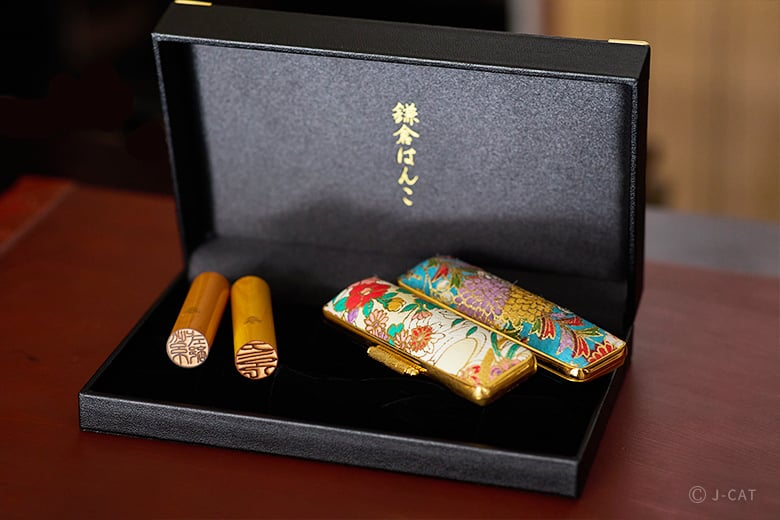
Working holiday participants do not need the most formal or expensive type of hanko available. What matters is that it is the right category, the right size, and has your name rendered clearly.
Type: Mitome-in (認め印) This is the standard everyday personal seal — unregistered, informal in the best sense, and entirely appropriate for all daily admin tasks a working holiday participant encounters. You do not register it with any government office. There are no fees beyond the purchase itself. You simply use it when a stamp field appears. A mitome-in is different from a jitsuin (registered seal), which is required for high-stakes legal transactions like purchasing property or registering a vehicle — situations outside the realistic scope of a working holiday stay.
Size: 10.5mm or 12mm diameter Standard Japanese document stamp boxes are sized around these dimensions. A 10.5mm hanko fits cleanly in almost every standard field. A 12mm stamp has a slightly more substantial impression and works well for lease agreements and bank forms where a fuller mark looks appropriate. Avoid going above 15mm — oversized stamps are harder to fit in standard fields and look disproportionate on everyday documents.
Material: Resin or eco-wood For a working holiday stay, mid-range durable materials are perfectly suitable. Resin (アクリル) stamps are lightweight, affordable, and hold their shape well over the course of a year or more. Eco-wood composites offer a warmer feel at a similar price point. Premium materials like buffalo horn or high-grade rosewood are better suited to business hanko or long-term resident seals. There is no practical reason to spend significantly more for a working holiday context.
Name rendering: Katakana or romaji This is the question most foreigners ask first. Japanese hanko traditionally carry the owner’s name in Japanese characters. For foreign names, there are two sensible options:
Katakana is the Japanese phonetic script used specifically for foreign words and names. Having your name rendered in katakana — “Sarah” becomes サラ, “Tom” becomes トム — is the most widely accepted and professionally appropriate choice. It signals that your stamp was made correctly for the Japanese context, and it sits naturally in stamp fields on Japanese forms.
Romaji (Roman letters) is increasingly accepted in international workplaces and younger urban environments, but can raise eyebrows in more traditional settings — older landlords, regional city offices, conservative employers. If your working holiday takes you to rural areas, farming placements, or traditional hospitality settings, katakana is the safer default.
When in doubt, katakana.
Common mistakes to avoid:
- Ordering a stamp larger than 15mm because it looks more impressive — it will not fit standard fields cleanly.
- Choosing an overly decorative or calligraphic font where your name becomes illegible. Readability is what matters on a functional document stamp.
- Assuming you can pick one up easily on arrival — while convenience stores and stationery shops sell generic stamps, they carry common Japanese surnames. Your foreign name will not be on the rack.
- Waiting until a form is in front of you before thinking about ordering. Customs and domestic shipping both take time, and running out of lead time leaves you in the awkward position of explaining why you do not have one yet.
Ordering Tips in English
Ordering a hanko in English has become genuinely straightforward. You do not need to navigate a Japanese website, use a translation tool for every field, or walk into a shop and point at things with diminishing confidence.
If you are still looking for the right role before your working holiday begins, ComfysCareer is a solid starting point for foreigner-friendly jobs in Japan.
Once your plans are in place, getting your hanko should be one of the first practical preparations you make. HankoHub offers a fully English ordering process built specifically for foreigners. You enter your name, choose katakana or romaji rendering, select size and material, and receive a stamp ready for professional and administrative use. Each step is explained clearly, which removes the guesswork that tends to trip people up when ordering through Japanese-language services.
A few practical points to keep in mind during the ordering process:
Confirm the katakana rendering before you finalise. A good service will show you exactly how your name will appear on the stamp before it is produced. Check it carefully. Unusual names or names with sounds that do not map neatly into Japanese phonetics sometimes need a small adjustment. This is the moment to catch that, not after the stamp arrives.
Plan for processing and shipping time. If you are ordering from outside Japan before your trip, factor in international shipping. If you are ordering after arrival, domestic delivery within Japan is typically fast — a few business days in most cases. Either way, do not leave it until the day before your city hall appointment.
Self-inking versus separate ink pad. A self-inking hanko has an ink reservoir built in, which makes it convenient for repeated use without carrying a separate pad. A traditional stamp used with a separate red ink pad produces a slightly more formal impression and is the standard in most official Japanese contexts. For daily admin across a working holiday year, self-inking is the more practical choice — it is one less thing to carry and one less thing to forget.
Store it carefully. In Japan, a personal seal is treated with the same seriousness as a handwritten signature. Do not leave it in shared spaces, lend it to others, or treat it as an item you might lose without consequence. If your stamp is used to sign a document, that carries real weight — even an unregistered mitome-in.
FAQ
Do I legally need a hanko as a working holiday visa holder in Japan? Not in every situation. Japanese law generally accepts handwritten signatures as an alternative to a hanko for most contracts and forms. However, individual institutions — banks, landlords, employers, city offices — set their own internal processes, and many of those processes include a hanko requirement. In practice, having one removes friction and avoids having to negotiate exceptions at every turn.
Will any stamp do, or does it need to be personalised? It needs to carry your name. The generic pre-made stamps sold at convenience stores and 100-yen shops carry common Japanese surnames. As a foreigner, your name will not be among them. A personalised stamp made with your actual name — in katakana or romaji — is what you need.
What if I arrive without a hanko and need one urgently? Some larger cities have same-day or next-day hanko services at speciality stationery shops (はんこ屋), particularly in central areas. These shops can often produce a basic resin stamp quickly. However, communication can be challenging if your Japanese is limited, and the quality and options available vary. Ordering in advance through an English-language service is the less stressful path.
Can I use the same hanko I ordered for HR onboarding on my lease and at the bank? Yes. An unregistered mitome-in is a general-purpose personal seal. There is no rule against using it across different contexts — employment contracts, bank forms, lease agreements, utility contracts. One hanko covers all of it.
Do I need to register my hanko anywhere? Not for working holiday purposes. Registration (producing a jitsuin for official government records) is required for major legal transactions like real estate purchases or vehicle registration — both outside the typical scope of a working holiday. An unregistered mitome-in is all you need.
Can I take the hanko home with me after my working holiday ends? Yes, and many people do. A personalised hanko with your name in Japanese is a functional and meaningful keepsake. If you ever return to Japan — for another visa, a holiday, or a longer stay — it will be ready to use again.
Next Steps

Japan’s daily admin is manageable once you understand what it involves and come prepared. The hanko question will come up at city hall, at the bank, at the real estate agent’s desk, and at your front door when a registered parcel arrives. Having a stamp already in hand means none of those moments slow you down.
Order a practical personal hanko at HankoHub — the process is fully in English, you choose how your name appears, and your stamp will be ready before Japan’s paperwork asks for it